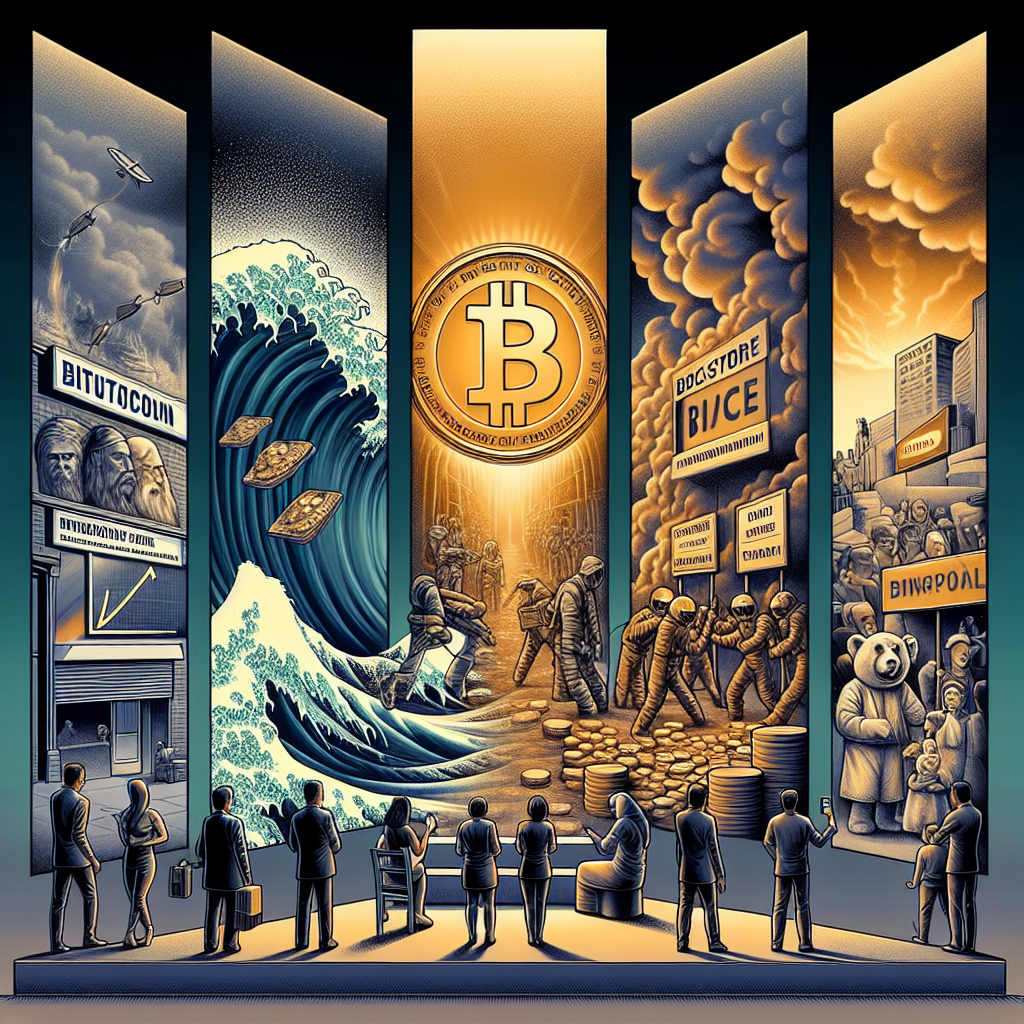
Bitcoin has been on a rollercoaster ride since its inception, often leaving its critics in the dust. From its humble beginnings to becoming a household name, the journey of this digital currency is nothing short of fascinating. As we delve into Bitcoin history & credibility, it’s worth noting that many naysayers have consistently underestimated its potential. Whether it was doubts about its legitimacy or questions surrounding the Satoshi Nakamoto identity, Bitcoin has risen to prove them wrong time and again.
If you’re just getting started on your crypto journey, understanding these pivotal moments can give you deeper insights into the cryptocurrency origins and how Bitcoin has shaped the landscape of digital currencies. It’s like watching a superhero origin story unfold, with plenty of plot twists along the way!
- 1998: The concept of digital cash was already floating around, but Bitcoin took things to a new level.
- 2009: The launch of the Bitcoin network marked a significant milestone in blockchain technology history.
- 2011: Critics claimed it would never be adopted by mainstream financial institutions—fast forward to today, and Bitcoin is accepted by thousands!
- 2017: Skeptics dubbed it a bubble as prices surged—but who could forget when Bitcoin reached $68,789.63 in November 2021?
- TODAY: With a market cap of approximately $300 billion as of October 26, 2023, Bitcoin’s credibility continues to grow despite ongoing challenges.
The evolution of Bitcoin from an experimental project to one of the most recognizable assets globally speaks volumes about its resilience and adaptability. Join us as we explore five defining moments when Bitcoin turned skepticism into awe!
The Genesis Block and Early Skepticism
Ah, the Genesis Block—the very first block mined on the Bitcoin blockchain, also known as Block 0. On January 3, 2009, Satoshi Nakamoto (yes, that mysterious figure) struck a blow against traditional banking systems by creating this digital currency. But not everyone was cheering; early skepticism ran rampant.
In those formative days, Bitcoin was often the punchline in jokes about currency. Critics laughed at the notion of a decentralized digital coin when traditional money had been reigning supreme for centuries. Many questioned how something you couldn’t physically hold could have any real value. “Who would ever use it?” they scoffed.
Bitcoin’s Unconventional Approach
- Decentralization: Unlike fiat currencies controlled by governments and central banks, Bitcoin operates on a peer-to-peer network that empowers users directly.
- Anonymity: The identity of Satoshi Nakamoto remains unknown, adding an air of mystery and skepticism about the project’s credibility.
- Blockchain Technology: The underlying technology was still in its infancy. Many were uncertain if it could handle widespread use or if it would crumble under pressure.
This early skepticism became a catalyst for innovation as developers began addressing these concerns one by one. Fast forward to today, and we see how far we’ve come! Bitcoin has not only survived but thrived, processing an average of approximately 7 transactions per second. Talk about a glow-up!
“The rise of Bitcoin illustrates not just the evolution of money but also our trust in digital currencies.”
As we reflect on this early skepticism surrounding Bitcoin’s creation story, it’s remarkable to see how those initial doubts were transformed into confidence over time. With its current market capitalization nearing $300 billion as of October 26, 2023, Bitcoin is proving skeptics wrong yet again—and this is just the beginning!
The First Real-World Transaction: The Pizza Purchase
Imagine a world where your favorite pizza could be bought with just a few clicks—and not a single dollar in sight. Enter the legendary story of the first real-world transaction using Bitcoin, which took place on May 22, 2010, and has since become a cornerstone in Bitcoin history & credibility.
The Pioneering Pizza Purchase
On this day, Laszlo Hanyecz made history by purchasing two pizzas for an astonishing 10,000 BTC. Yes, you read that right—10,000 Bitcoins! Back then, Bitcoin was still finding its footing, valued at roughly $0.0025 each. So essentially, Laszlo spent about $25 for those two delicious pizzas. Fast forward to today’s prices—those pizzas would cost millions if he had held onto his Bitcoins! Talk about a slice of missed opportunity!
- Pizza Day: This moment is now celebrated annually as “Bitcoin Pizza Day,” reminding us of the humble beginnings of this revolutionary currency.
- Market Recognition: The purchase demonstrated that Bitcoin could indeed be used for tangible goods and services—a pivotal moment for proving cryptocurrency legitimacy.
- Cultural Impact: The transaction sparked conversations and helped to legitimize cryptocurrencies as a viable alternative to fiat money.
This pizza purchase served as more than just a quirky anecdote; it was an important demonstration of Bitcoin’s utility in the real world. As more businesses began accepting Bitcoin transactions, it laid the groundwork for what would become an explosion in digital currency adoption.
A Slice of Reality
While Laszlo’s decision may now seem questionable given Bitcoin’s meteoric rise—reaching an all-time high of $68,789.63 on November 10, 2021—his choice was groundbreaking at the time. It showcased early adopters’ faith in digital currency and catalyzed further developments in digital currency evolution.
“The first real-world transaction using Bitcoin turned skeptics into believers and set off a chain reaction in cryptocurrency adoption.”
The legacy of that pizza purchase is felt throughout the crypto community today. It not only embodies the spirit of innovation but also serves as a wonderful reminder: sometimes taking risks can lead to monumental rewards down the line! So next time you grab a slice, think about what you might have been able to purchase instead with those Bitcoins!
Surviving Regulatory Challenges
As Bitcoin continued to gain traction, it inevitably drew the attention of regulators worldwide. From the get-go, many skeptics argued that cryptocurrencies would face insurmountable regulatory challenges that would prevent them from achieving mainstream acceptance. Yet, Bitcoin has managed to navigate this turbulent landscape in ways that have often left critics scratching their heads.
The Evolving Landscape of Regulation
- Initial Hesitance: In its early years, Bitcoin was often associated with illicit activities, leading regulators to frown upon its growing popularity. However, as more legitimate use cases emerged, authorities began to see the potential benefits.
- Taxation and Compliance: Countries started implementing tax guidelines for cryptocurrency transactions. Surprisingly, instead of hindering adoption, these measures legitimatized Bitcoin in the eyes of investors and businesses.
- Ongoing Adaptation: Regulators are now working on frameworks that can accommodate innovations like decentralized finance (DeFi). While it’s a complex task, it shows a willingness to adapt rather than outright banish cryptocurrencies.
An interesting fact is that while there have been numerous crackdowns—such as China’s ban on crypto trading in 2021—Bitcoin’s price has not only recovered but soared after such events. It seems that each regulatory challenge has been met with resilience and renewed interest!
“Regulatory scrutiny might seem daunting, but in reality, it often validates the legitimacy of Bitcoin.”
A Case Study: The SEC and ETF Proposals
The ongoing saga involving the U.S. Securities and Exchange Commission (SEC) and Bitcoin exchange-traded funds (ETFs) perfectly illustrates how regulatory hurdles can become stepping stones instead. For years, Bitcoin enthusiasts eagerly awaited approval for Bitcoin ETFs, viewing them as a means to increase institutional investment.
- The Waiting Game: After numerous rejections and delays from the SEC, anticipation reached a fever pitch—yet each setback seemed only to bolster the community’s resolve.
- Learning Curve: Regulators began understanding that ETFs could provide a safer avenue for investors to access Bitcoin without needing to hold or manage it directly.
- Tipping Point: In October 2021, when the first U.S. Bitcoin futures ETF was finally approved, it marked a significant turning point, showcasing how regulations could evolve positively around digital assets.
This case exemplifies how regulatory skepticism can morph into acceptance—and ultimately growth opportunities for Bitcoin! Rather than crumbling under pressure like a poorly made soufflé, Bitcoin has risen beautifully and continues to redefine what’s possible in finance.
In conclusion, surviving regulatory challenges has become yet another testament to Bitcoin’s credibility over time. It’s not just about dodging bullets; it’s about evolving alongside them! So next time you hear someone questioning whether regulation will kill off cryptocurrencies altogether—remember how far we’ve come!
The Mt. Gox Collapse: Proving Resilience After Crisis
The infamous Mt. Gox collapse in 2014 serves as a cautionary tale for anyone dabbling in the world of cryptocurrencies, yet it also highlights Bitcoin’s remarkable ability to bounce back from calamity. Once the largest Bitcoin exchange, Mt. Gox handled about 70% of all Bitcoin transactions at its peak. However, it fell victim to a massive hack that resulted in the loss of approximately 850,000 BTC—an event that sent shockwaves throughout the crypto community and led many to declare Bitcoin dead.
A Lesson in Resilience
Rather than marking the end of Bitcoin’s journey, this crisis became a turning point that showcased the cryptocurrency’s resilience. Here’s how:
- Increased Scrutiny and Security Measures: The fallout from Mt. Gox led to heightened scrutiny on security practices across all exchanges. This incident highlighted vulnerabilities and spurred improvements in security protocols across the industry.
- Improved Regulations: Following the collapse, regulators began paying closer attention to cryptocurrency exchanges, leading to more robust guidelines aimed at consumer protection and enhanced credibility of digital assets.
- A Surge in Innovation: The crisis ignited a wave of new exchanges that prioritized security and user trust, fostering innovation within the crypto space and laying down a foundation for more reliable platforms.
The aftermath was not without its challenges; many investors were understandably shaken by the incident. Yet interestingly enough, Bitcoin emerged from this disaster stronger than ever! The price initially plunged but eventually rebounded, demonstrating that public faith in this cryptocurrency remained largely intact.
“The Mt. Gox incident was not just a disaster; it was a crucible that tempered Bitcoin’s resolve and credibility.”
Lessons Learned and New Frontiers
The collapse taught important lessons about responsibility—both for traders as well as exchange operators. Security became paramount; users began demanding better practices from exchanges they used. This shift is evident today as we see platforms implementing measures like multi-signature wallets and cold storage solutions to safeguard funds.
- Decentralized Exchanges Rising: The incident paved the way for decentralized platforms where users trade directly without relying on centralized authorities—an evolution reflecting blockchain’s core principles.
- User Awareness: Investors became increasingly educated about risks involved in crypto trading, leading to more informed decision-making across the board.
Ultimately, while the Mt. Gox collapse was a stark reminder of potential pitfalls in crypto trading, it also reinforced Bitcoin’s status as a pioneer on a path toward greater acceptance and innovation within financial landscapes worldwide.
This episode is just one in a series of events that have showcased how resilient Bitcoin is against adversity. As we explore further into Bitcoin history & credibility, one thing becomes clear: each setback has only propelled it closer to establishing itself as a cornerstone of modern finance!
The Bull Run of 2017: A New Era of Adoption and Investment
The bull run of 2017 wasn’t just another price surge; it was a seismic shift in the world of Bitcoin and cryptocurrencies as a whole. As Bitcoin’s price skyrocketed, reaching an astonishing $19,783 in December of that year, skeptics were left reeling. They had predicted yet another bubble destined to burst, but instead, this was a pivotal moment that marked a new era of adoption and investment.
Bitcoin Goes Mainstream
Before 2017, Bitcoin was often seen as the domain of tech-savvy enthusiasts and libertarians. However, during this bull run, even your grandma knew what Bitcoin was! Major news outlets were buzzing with stories about cryptocurrencies, drawing in the attention of everyday investors and the institutional crowd alike. Here are some highlights that showcased its rise:
- Increased Media Coverage: Major media outlets began dedicating entire segments to explain what Bitcoin was and how it worked. The term “cryptocurrency” entered everyday vocabulary!
- New Investment Vehicles: The launch of Bitcoin futures trading on platforms like the Chicago Mercantile Exchange (CME) opened up possibilities for institutional investors who previously hesitated to dip their toes into this volatile market.
- A Surge in Wallet Downloads: Crypto wallets saw downloads spike phenomenally during this bull run as more people wanted to participate in this booming market.
A Shift in Perception
The rising prices led many to reconsider their stance on digital assets. Here’s how perceptions began to change:
- Legitimacy Boost: With price increases came greater acceptance from traditional financial entities. Financial institutions started investing in blockchain technology and exploring crypto products.
- Diverse Participation: People from all walks of life joined the cryptocurrency bandwagon—students, retirees, and even professionals looking for alternative investment opportunities.
- Skepticism Melts Away: Critics were slowly silenced as Bitcoin’s resilience became evident; it had survived several previous booms and busts and seemed to be here to stay.
“The bull run of 2017 proved that Bitcoin wasn’t just a fad; it was a financial revolution unfolding right before today. More importantly, it opened doors for countless projects aiming at mass adoption—think crypto airdrops! These initiatives play a key role in democratizing access to digital currencies for everyone—yes, even your grandma!
As we look back at the pivotal moments like the bull run of 2017 within Bitcoin history & credibility, it’s clear that this surge was not merely about profits; it became part of a broader narrative that transformed finance as we know it! So whether you’re an old hand or new to cryptocurrencies—remember that behind every rise is a community eager to embrace innovation!
From humble beginnings to becoming a cornerstone of digital finance, Bitcoin has repeatedly silenced its critics with resilience and adaptability. As we continue observing Bitcoin market trends, it’s clear that this pioneering cryptocurrency has established itself as more than just a passing fad—it’s here to stay as an influential force in global finance.